Kosovo
I wanted to visit Kosovo to add another country to my list, and I did it as a day trip from Skopje, North Macedonia, through a Civitatis excursion — 10 hours in total.
Whether Kosovo is actually a “country” depends on who you ask. It declared independence from Serbia in 2008, but Serbia still considers it part of its own territory — and for good reason, historically speaking. Kosovo was essentially the cradle of the Serbian kingdom, where Serbian kings built their most important churches and monasteries, and where one of the most defining battles in Serbian history was fought. For Serbs, giving up Kosovo isn’t just a territorial issue — it goes much deeper than that.
What is undeniable is that Kosovo has the youngest population in Europe — more than 70% of its people are under 35. You feel it in the streets, in the energy of the place.
Time of Year I Visited
I went in June. It was warm — you might want a light jacket for the early morning, but once the day gets going, it gets properly hot.
Did I Feel Safe?
My only experience of Kosovo was through this Civitatis excursion, so my sense of safety was very much shaped by that context — I was part of an organised group the whole time. We were eight people in total, all men except me. Let’s just say I was the queen of the van. Not a single problem the whole day, I laughed a lot, and honestly one of the good things about doing tours with Civitatis is that the groups are small, which makes everything more fun.
What’s Worth Doing
The excursion covered two cities: Pristina and Prizren.
Pristina: The capital of Kosovo. We spent about an hour walking through the centre — Ottoman mosques, monumental buildings, the old bazaar with spices and movement. What caught my attention most was the National Library of Kosovo — a building that looks like it belongs in outer space, with its iconic metal domes and steel mesh facade. One of those structures you stop and stare at.
Prizren: A completely different story — a much smaller city, beautiful, with cobblestone streets and red-roofed houses that look like they haven’t changed in centuries. Between the two cities, Prizren was definitely my favourite. There’s a fortress above the city — the Kalaja — that you can walk up to. Just be careful on the way down, because the stones are slippery and you can easily take a tumble. We also went to the iconic bridge over the Bistrica river and ended the visit at the Shadërvan square, full of bars and restaurants. One thing that made me smile: there’s a whole street lined with the most extravagant sequined dresses you’ve ever seen. I asked my guide and they’re traditional wedding dresses. An entire street of them — you have to see it to believe it.
By the time we got to Prizren it was lunchtime, and we went to Beska, right on the Shadërvan square. They did a smoke show with the food, the meal was very good, and we had a great time. We had some beers — even the driver joined us, though he stuck to water. The food is Turkish-influenced, which makes sense for this part of the world. I had a köfte — a traditional Turkish meat patty — served with a cream and cheese sauce on top that was absolutely incredible. They also had a roasted pepper and cheese dip that was decadent.
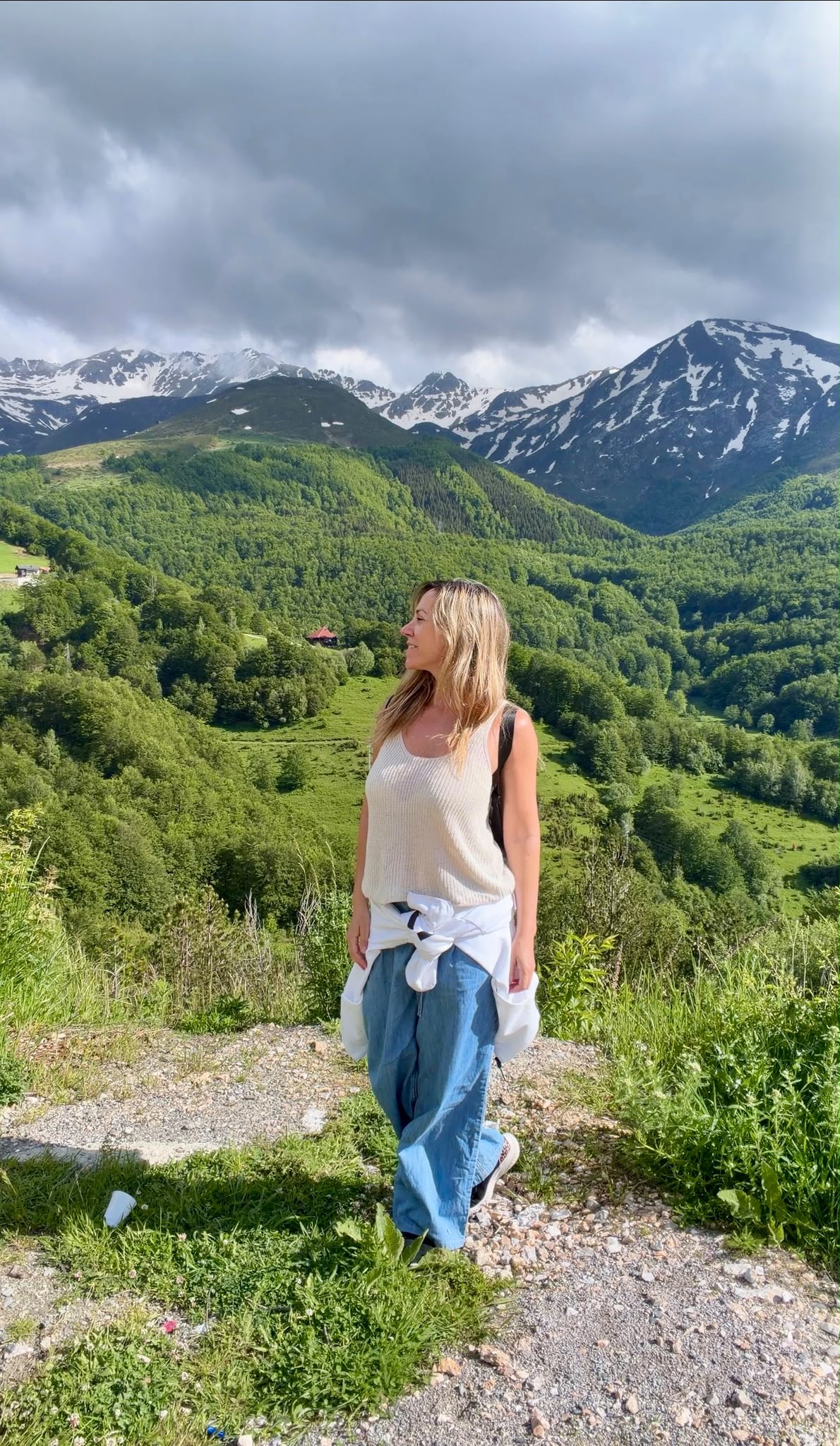
On the way back to Skopje, we passed through the Sharri mountains — a mountain range on the border between Kosovo and North Macedonia. The landscape was so green and spectacular that it felt like being in Switzerland. An unexpected highlight of the trip. If you ever want to stay in the area, there’s a well-known hotel right in the mountains called Hotel Sharri — 1,200 metres above sea level, with panoramic mountain views and a restaurant with a terrace. Looks like a great spot to disconnect.
How Long Did I Stay?
One day, as part of an excursion from Skopje, North Macedonia. Enough to see the highlights.
Been to Kosovo? Share your experience using the review form below.