Lima, Peru
I visited Lima twice — once when my flight was delayed and I had an unexpected layover, which I used to explore the historic centre, and once intentionally, arriving two days early before starting my Peru Hop itinerary. I wasn’t about to risk missing my first departure because of a late flight.
Lima has one of the best food scenes in the world. That alone is reason enough to give it at least two days.
Time of Year I Visited
I went in June. Warm and comfortable for walking.
Did I Feel Safe?
Lima is a city where you need to stay alert — like many large Latin American capitals, it has areas that are safer than others. For me, Miraflores and Barranco are the best neighbourhoods to stay in — they’re the most tourist-friendly and well-lit, but that doesn’t mean you can let your guard down completely. Always be careful with your belongings and stay aware of your surroundings, wherever you are in the city.
For taxis, use Uber or Cabify — both work well in Lima.
Where I Stayed
I stayed in Miraflores — the neighbourhood I’d recommend as your base in Lima. It’s walkable, right by the ocean, and surrounded by great restaurants. From there you can walk to Barranco, or take a taxi to the historic centre.
What’s Worth Doing
Historic Centre: The Plaza de Armas, colonial architecture, and the Convent of San Francisco are all worth a visit. And nearby, in the Parque de la Reserva, there’s the Circuito Mágico del Agua — the largest fountain park in the world, with 13 choreographed fountains that come alive at night with lasers, lights and music. Shows run Tuesday through Sunday at 7:15pm, 8:15pm and 9:30pm. It’s one of those things that sounds touristy and turns out to be genuinely impressive.
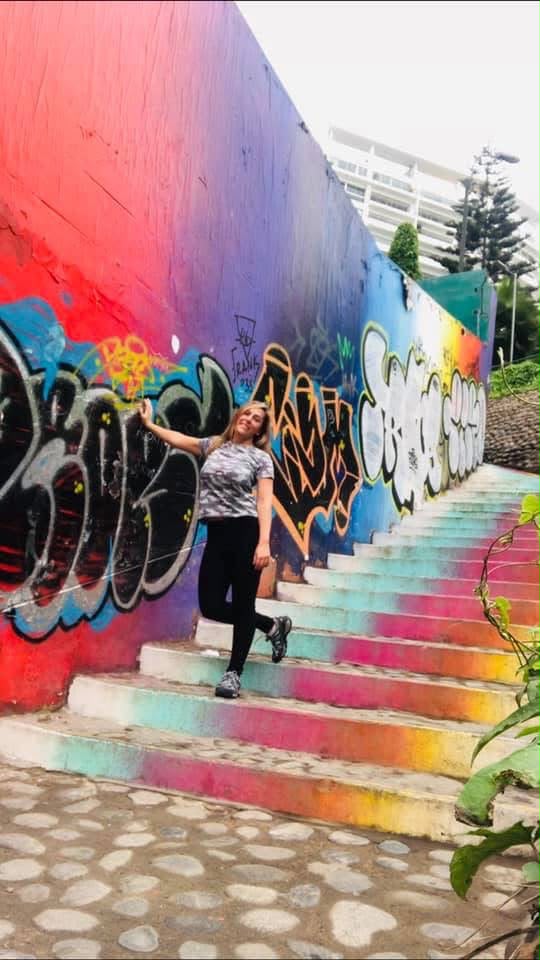
Miraflores & Barranco: These two neighbourhoods are right next to each other along the coast — spend a day exploring both. Miraflores is polished and lively, Barranco is bohemian and artsy, full of bars, cafes, murals, and the famous Puente de los Suspiros (Bridge of Sighs). The legend goes that if you cross the bridge without taking a breath, your wish for love will come true. It didn’t work for me, but worth trying — at the very least you’ll get a great photo.
What I Ate
Lima’s gastronomy is genuinely one of the best in the world — I’ll add specific restaurants shortly.
What I Ate
Lima’s gastronomy is genuinely one of the best in the world — and I mean that. Every restaurant I went to was good.
Punto Azul was a standout — I had a risotto there that I still think about. But beyond any specific restaurant, there are dishes you simply cannot leave Lima without trying:
- Ceviche — the best in the world, full stop
- Causa — a layered cold potato dish, creamy and delicate
- Lomo saltado — stir-fried beef with tomatoes, onion and fries, a Peruvian classic
- Papas a la huancaína — potatoes in a spicy, creamy yellow sauce
- Suspiros limeños — a traditional caramel dessert, silky and rich
- Tres leches — the cake version here is exceptional
There’s also a restaurant called Central that I didn’t get to try, but a friend of mine went and said it was one of the best meals of her life. It’s in Barranco, run by chef Virgilio Martínez — it was crowned the best restaurant in the world in 2023. Each course represents a different altitude and ecosystem of Peru. If you have the chance to go, I’d love to hear what you thought — leave a comment below.
How Long Did I Stay?
Two days across two visits — one dedicated to the historic centre, the other to Miraflores and Barranco. It’s the right amount of time, and it fits perfectly at the start or end of a bigger Peru itinerary.
Been to Lima solo? Share your experience using the review form below.